
If you've ever looked at a bag of insulation, you've probably seen the term “R-value” printed somewhere on it. It sounds technical, but the idea behind it is refreshingly simple, and once you understand it, choosing and specifying the right insulation becomes easy. Here's the plain-English version, using the current South African standard.
Making homes and businesses comfy since 1984
Genuine reviews from Therm Guard customers across South Africa.
“Service was exceptional. Willie and his staff are very professional. Already on thr first day we could feel a remarkable difference in our house.”
“Willie Hood was very professional, kind and a pleasure to work with!! He is most considered and kind!! Will do business with him any time again !!”
“Fantastic product and brilliant service. I would highly recommend Willie and his team, My home is now warm and cosy in winter and cool in the summer”
“Willie at Thermaguard is reliable and honest. We are so thrilled with our insulation installation by him. Our home has been so much cooler (at least 8 degrees in summer) and so much warmer in winter.”
“Great experience working with Thermguard Mpumalanga, Willie Hood. Willie was very quick with his quotation end explained the whole process. Arrived on site as promised and completed the job in no time.”
“Service was exceptional. Willie and his staff are very professional. Already on thr first day we could feel a remarkable difference in our house.”
“Willie Hood was very professional, kind and a pleasure to work with!! He is most considered and kind!! Will do business with him any time again !!”
“Fantastic product and brilliant service. I would highly recommend Willie and his team, My home is now warm and cosy in winter and cool in the summer”
“Willie at Thermaguard is reliable and honest. We are so thrilled with our insulation installation by him. Our home has been so much cooler (at least 8 degrees in summer) and so much warmer in winter.”
“Great experience working with Thermguard Mpumalanga, Willie Hood. Willie was very quick with his quotation end explained the whole process. Arrived on site as promised and completed the job in no time.”
Think about getting dressed for a freezing morning. A thin cotton T-shirt does almost nothing to keep the cold out. A thick wool jumper keeps you warm for hours. If jackets came with a rating for how well they resisted the cold, the wool jumper would score far higher than the T-shirt.
That's essentially what an R-value is - except it's rating your roof insulation instead of your jacket.
QUICK DEFINITION
R-value (or “thermal resistance”) measures how strongly a material resists the flow of heat through it, expressed in m²·K/W. The higher the number, the harder it is for heat to pass through.
That's why R-value - not thickness on its own - is the number worth comparing. Two products of the same thickness can perform very differently depending on what they're made of.

A ceiling with insufficient insulation lets heat move through it too quickly. In practice, that can mean:
On the energy side, South African insulation guidance indicates that correctly insulating the roof and ceiling can save up to 45% of the energy used for heating and cooling a home. That doesn't mean every household's total electricity bill drops by 45% - actual savings depend on the home, the weather, windows, draughts, appliances and how it's used — but it does show why the ceiling is one of the most important parts of a home to insulate properly. And for new buildings, it's simply the law — more on that below.
Heat always moves from warm to cold - the same way water always flows downhill. In winter, the warm air inside your home pushes up against the ceiling, looking for a way out into the cold roof space above. In summer, it works in reverse: the sun heats your roof to well over 60°C, and that heat pours straight down into your rooms.
An uninsulated roof gives heat an easy, open path to escape or enter — which is why homes without insulation feel freezing in winter and like an oven in summer, no matter how hard the aircon works.
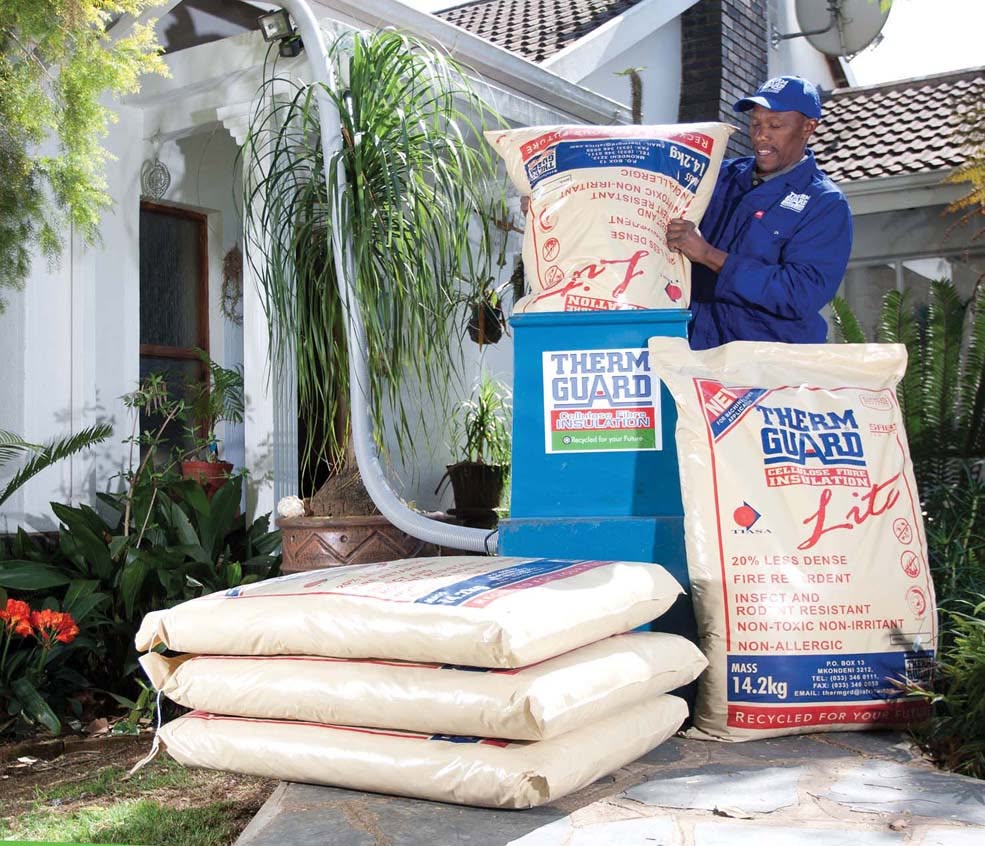
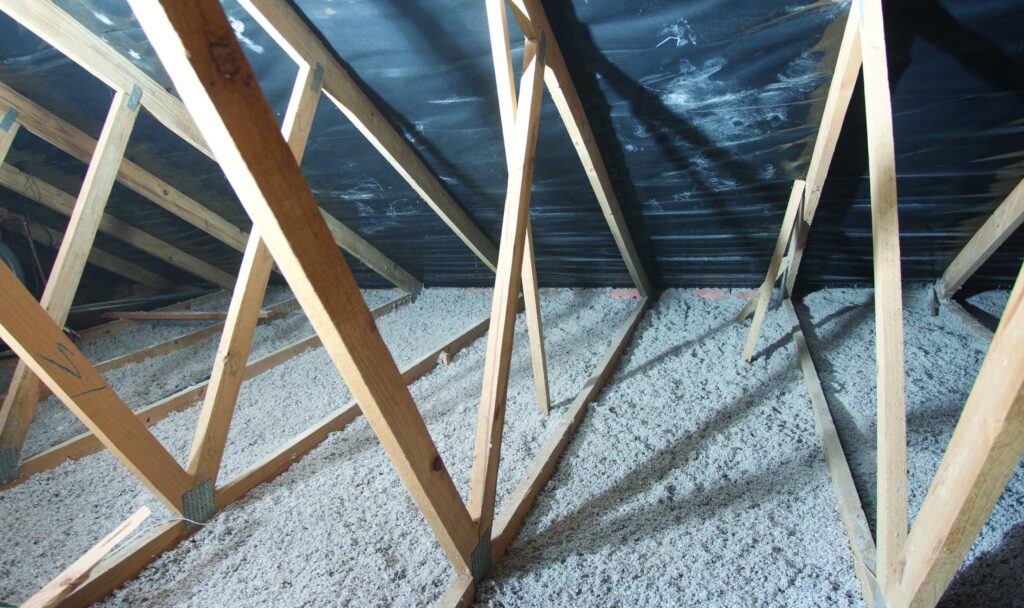
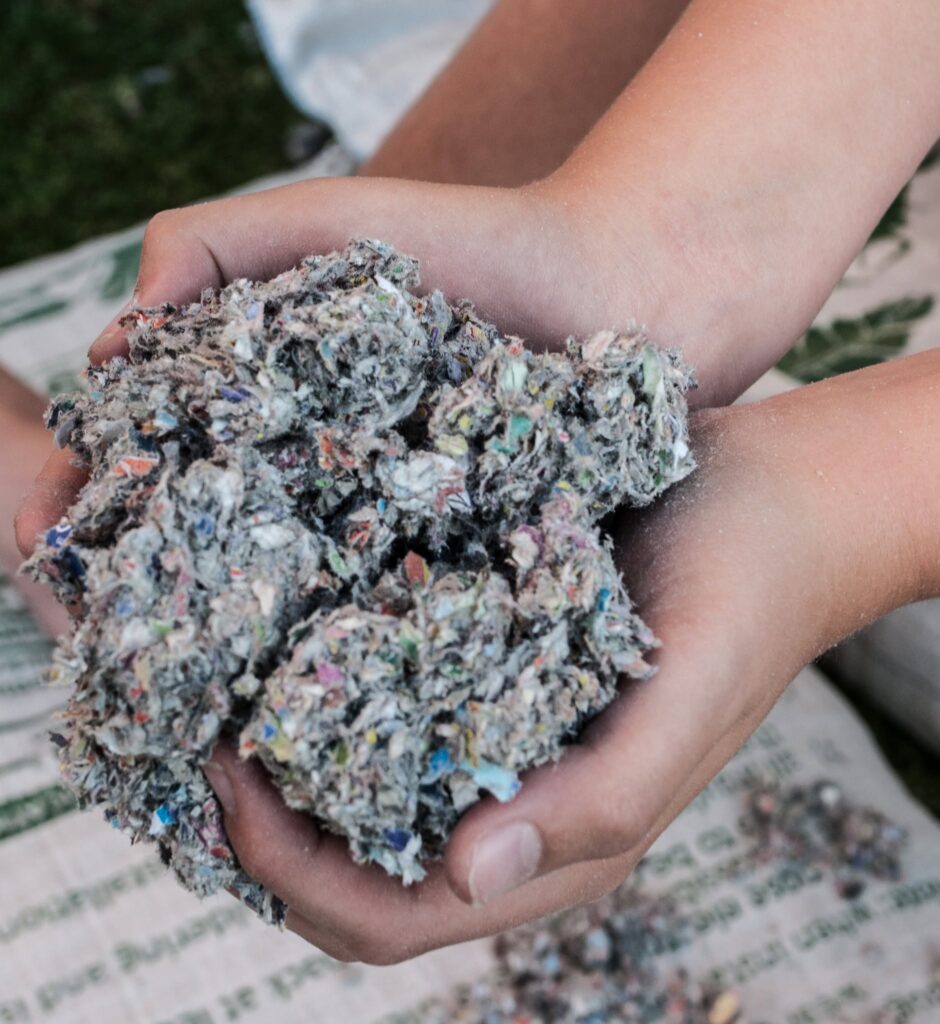
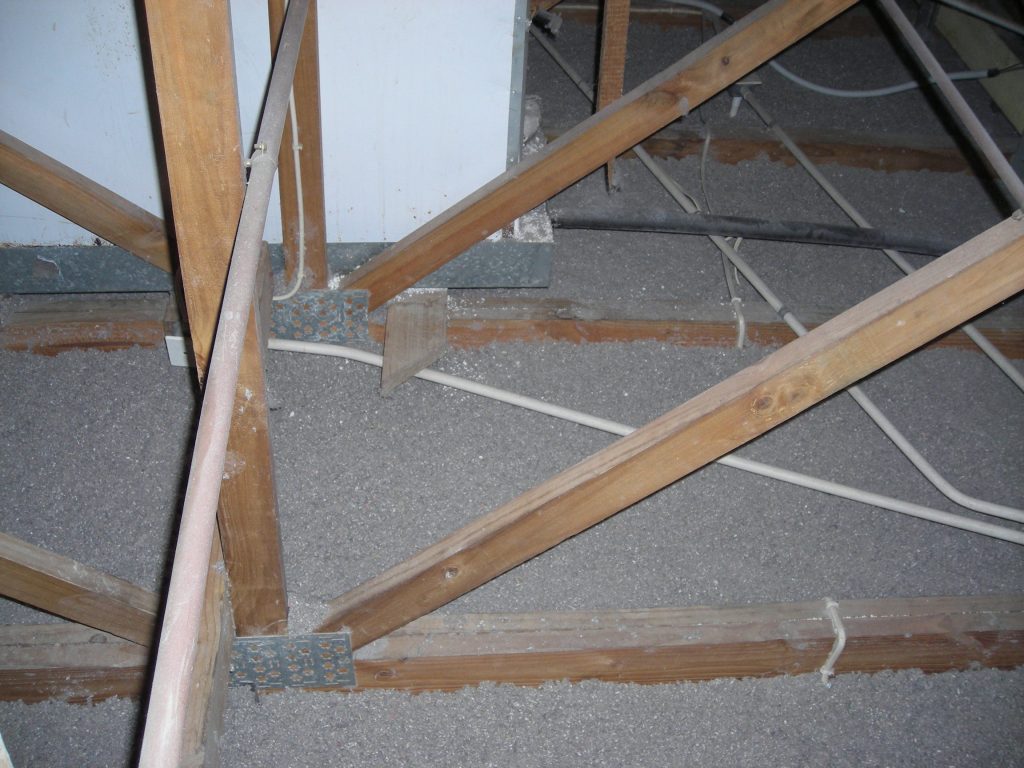
Insulation works by getting in the way. Thermguard's cellulose fibre is made up of millions of fine fibres that trap tiny pockets of air between them. Air on its own is a poor conductor of heat, so all those trapped air pockets act like millions of tiny roadblocks, forcing heat to take a long, slow path instead of a quick one. Because Thermguard is blown into the roof as a loose fill rather than laid in rigid sheets, it settles into every gap, corner and awkward angle around trusses and beams — leaving no weak points for heat to sneak through.
Properly installed, this keeps around 91% of your home's heat from escaping in winter and blocks roughly 88% of the sun's heat in summer — rising to about 92% heat-loss prevention at a 135mm installed thickness. Insulation doesn't produce cold air or warmth of its own — it simply helps your home hold onto the temperature you want for longer.

The R-value of bulk insulation like Thermguard comes down to two things: the thickness installed, and the material's thermal conductivity — how easily heat passes through it, shown by the symbol λ or k. A lower conductivity figure means the material transfers heat more slowly.
THE FORMULA
R-value = insulation thickness (m) ÷ thermal conductivity (W/(m·K))
Thermguard's published thermal conductivity is 0.040 W/(m·K). That lets us work out its R-value at any thickness — for example, 100mm gives 0.100 ÷ 0.040 = R2.50, and 135mm gives 0.135 ÷ 0.040 = R3.375, rounded to R3.38. The deeper the same material is installed, the higher its R-value climbs:
Thermguard Thickness | Insulation R-Value |
75mm | R1.88 |
100mm | R2.50 |
115mm | R2.88 |
130mm | R3.25 |
135mm | R3.38 |
These are the R-values of the Thermguard insulation layer on its own. The complete roof-and-ceiling system contributes a bit more on top of that — which is where the next distinction matters.
This is where many homeowners, and more than a few contractors get confused. There are two different numbers at play:
This is the thermal resistance provided by the insulation product alone — for example, 100mm of Thermguard provides approximately R2.50, and 135mm provides approximately R3.38.
This is the combined resistance of the entire roof-and-ceiling assembly: roof tiles or sheeting, ceiling boards, air spaces, bulk insulation, any verified reflective system, and internal and external air films together.
A typical tiled roof with standard ceiling board already provides around R0.35 before any insulation is added. So if 135mm of Thermguard provides R3.38, the total works out to roughly:
WORKED EXAMPLE
R0.35 (roof and ceiling) + R3.38 (Thermguard at 135mm) ≈ R3.73 total
That's why a Thermguard product rating of R3.38 is enough to help a complete roof assembly reach the R3.70 total the law requires — the roof structure itself makes up the difference.
You might assume insulation is a nice-to-have. For new buildings in South Africa, it's the law.
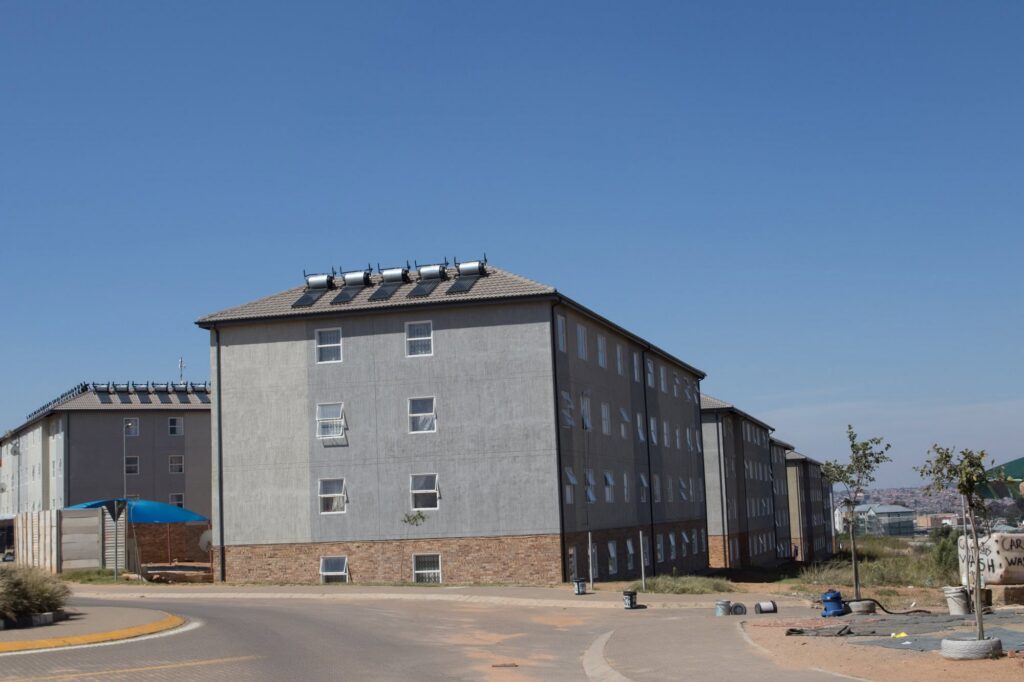
Ceiling insulation first became compulsory for all new buildings in November 2011, under the national building regulation SANS 10400-XA: Energy Usage in Buildings. The law didn't come from nowhere — it came from a national electricity shortage. Eskom's power stations couldn't keep up with demand, and building new ones would take years, so alongside increasing supply, Eskom also focused on reducing it — helping South Africans need less electricity in the first place. Insulation was identified as one of the most effective ways to do that: if ceiling insulation and efficient windows were fitted to every new building, an estimated 3,500 MW of electricity could be saved — almost double the 1,800 MW produced by Koeberg, South Africa's only nuclear power station.
The standard has since been updated. The current version - SANS 10400-XA:2021 (Edition 2), published in November 2021 - replaced the original six climatic zones with the energy-zone system used today, and in some areas raised the minimum insulation levels required. Building plans and energy calculations should follow this 2021 framework, not the older six-zone table still shown on some websites.
Insulating a home isn't only about personal comfort and a lower bill - collectively, it takes real pressure off the national grid and helps reduce the risk of load-shedding, with better comfort and resale value built in along the way.
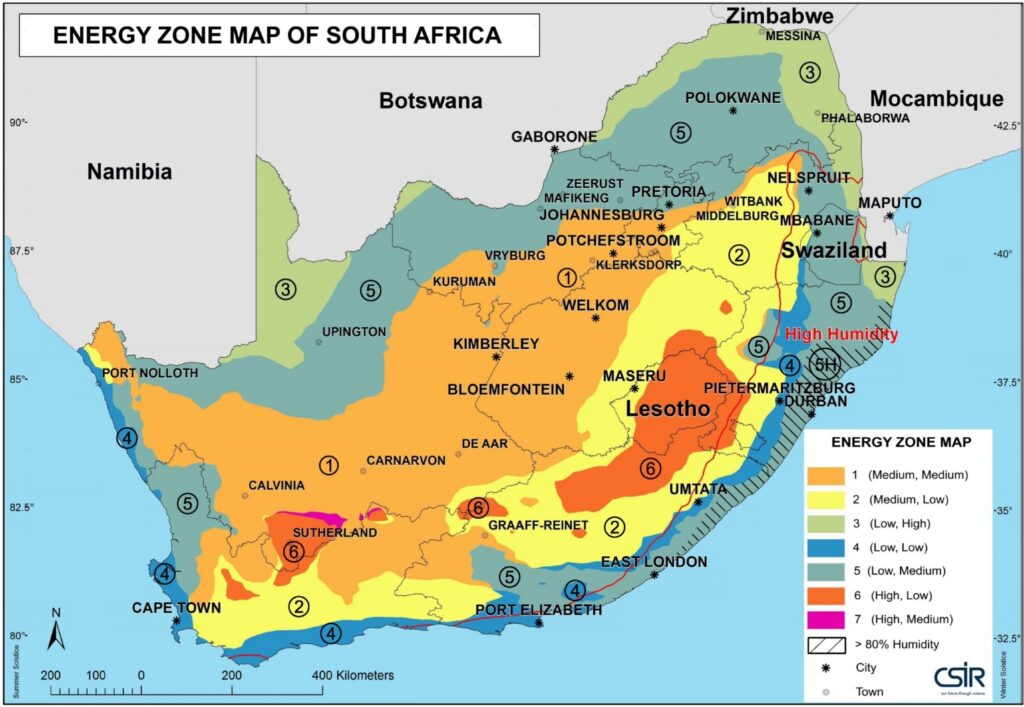
SANS 10400-XA:2021 divides South Africa into Energy Zones 1 to 7, plus a high-humidity sub-zone called Zone 5H. The zones are set by how much heating and cooling energy a building needs to stay comfortable, rather than by location alone. Under the deemed-to-satisfy approach, the minimum total roof R-value simplifies to just two figures:
| South African Energy Zone | Minimum Total Roof R-Value |
| Energy Zones 1 – 7 | R3.70 |
| Energy Zone 5H | R2.70 |
Thermguard has a design specification for each SANS 10400-XA Climatic Zone.
A typical tiled roof and standard ceiling provides around R0.35 on its own, so the added insulation still needed works out to approximately:
| Energy Zone | Typical Existing Roof | Approx. Added Insulation Needed |
| Zones 1 – 7 | R0.35 | R3.35 |
| Zone 5H | R0.35 | R2.35 |
Zone 5H covers high-humidity coastal locations and needs particular attention to condensation control and roof ventilation alongside insulation.
A few examples from the current SANS 10400-XA:2021 zone map:
| Energy Zone | Example Areas |
| Zone 1 | Johannesburg, Bloemfontein, Kimberley, Potchefstroom |
| Zone 4 | Cape Town, Gqeberha, George, Pietermaritzburg |
| Zone 5 | Pretoria, Polokwane, East London |
| Zone 5H | Durban (high-humidity coastal belt) |
Energy-zone boundaries don't always follow provincial or municipal borders — some cities are split by the map almost in half. Always check the exact address against the official SANS 10400-XA energy-zone map rather than assuming from the nearest city.
Reflective foil doesn't have one fixed R-value that can simply be subtracted from the insulation requirement. Its real-world performance depends on the direction of heat flow, the size of the adjacent air space, roof slope and orientation, how well it was installed, and how much dust has settled on the surface over time. Reflective insulation is rated as part of a system — foil plus the required air space — not as a standalone number.
Don't assume every foil layer automatically contributes a fixed value; its verified system R-value needs to be calculated for the specific roof. Thermguard, by contrast, is bulk insulation — its published R-value is based on the material and installed thickness, not on an assumed air space.

The R-value on the bag only delivers the expected result when the insulation is installed correctly. Performance can be reduced by gaps between sections, uncovered ceiling edges, compression, insufficient thickness, material disturbed during electrical work, missing coverage around roof obstructions, thermal bridging through trusses and joists, or wet and damaged insulation.
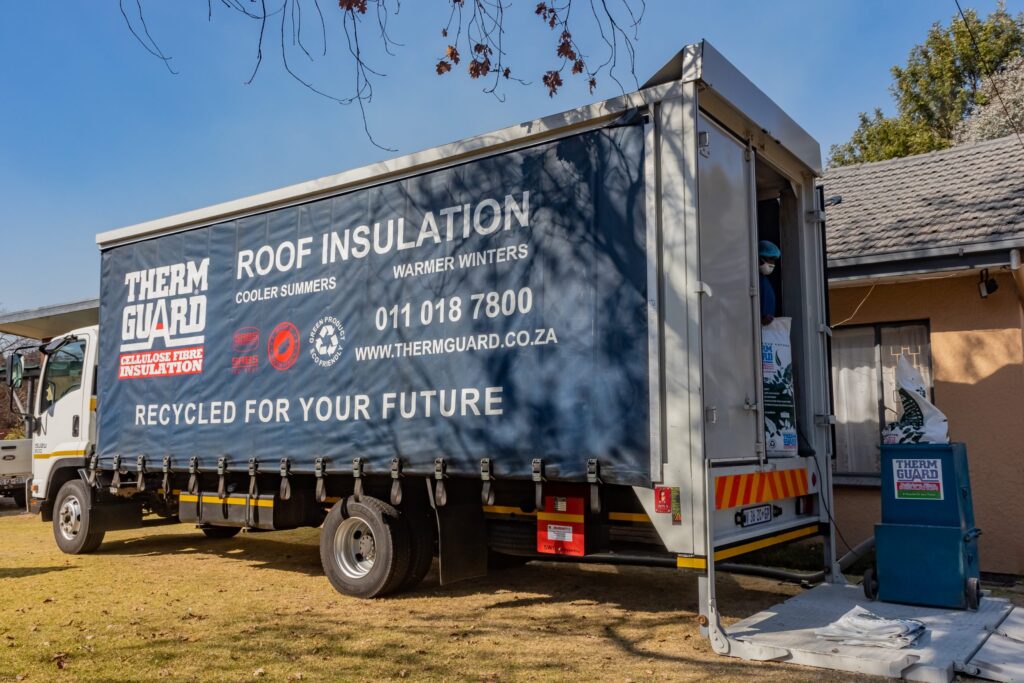
Thermguard is blown into place rather than cut into individual pieces, so the fibres move around trusses, joists, wiring and irregular areas before settling to a measured depth across the whole ceiling — giving more consistent coverage and reducing the risk of gaps in complicated roof spaces. It doesn't change what R-value means; it just helps the installed insulation actually deliver the R-value it was specified to provide.
Less heating and cooling load means real savings, with many homeowners seeing the product pay for itself within about three years.
A warmer home in winter and a cooler one in summer, without cranking the thermostat.
Cellulose fibre is dense and absorbs sound, cutting down outside noise from traffic and neighbours.
Thermguard is made from 80% recycled newsprint, using a low-energy manufacturing process.
Once you know the verified R-value, required thickness, installation quality and total price, you can compare products properly — not just by which roll looks thickest.
A compliant, comfortable, energy-efficient home is more attractive to buyers.
Compulsory for all new buildings under SANS 10400-XA, and often required for renovations and plan approvals too.
Every insulated roof reduces pressure on the national electricity
grid.
If You're Building a New Home
Ask your architect, architectural technologist or competent energy professional to confirm:
Arrange a physical roof inspection. A good contractor should check:
The energy-zone requirements give a useful benchmark, but the right retrofit solution always has to account for the actual property — not just a table.
A higher R-value does mean more resistance to heat flow. But once the required performance is reached, each further increase produces a smaller improvement. The goal is the correct R-value for the property — not simply the thickest insulation possible.
No. R-value measures resistance to heat flow, not a guaranteed temperature change. The actual improvement depends on the roof, windows, orientation, shade, ventilation, draughts, weather and how the home is used.
Not directly. A stronger R-value reduces the heating and cooling needed to stay comfortable, but the electricity saving depends on the property and how it's occupied.
Only if it's still dry, clean, evenly installed and in good condition. Damaged, compressed, displaced or contaminated insulation may no longer perform at its original rating and shouldn't automatically be counted at full value.
They provide the same nominal thermal resistance when both have verified test values and are correctly installed. Their cost, fire performance, acoustic properties, environmental impact and ability to cover a complicated roof can still differ.
The formula itself is simple — the harder part is knowing the verified R-value of your actual roof assembly. A physical inspection and proper assessment are recommended before the final thickness is specified.
The correct insulation depth depends on more than the size of your home. Thermguard considers your roof construction, South African energy zone, existing insulation, ceiling type and required total R-value before recommending an installation depth.
Thermguard has manufactured cellulose fibre insulation in South Africa since 1984, carries the SABS Mark, and is a member of TIPSASA (the Thermal Insulation Products & Systems Association).
Was this page helpful?
Thanks — that helps us make these pages better.
Our team is ready to help with questions about Thermguard, ceiling insulation, installation or quotations.

Thermguard is South Africa’s original cellulose fibre insulation, helping homes, offices and commercial buildings stay warmer in winter and cooler in summer since 1984.
Made from 80% recycled newsprint, Thermguard is blown into the ceiling to fill gaps and hard-to-reach spaces for consistent thermal coverage. Through our nationwide network of approved contractors, we provide a proven, energy-efficient insulation solution across South Africa.
Telephone
Head Office
© 2026 Thermguard. All rights reserved. Privacy Policy · Sitemap